

Long time, no post. I’ve got to get better at updating this blog. Good news is I have something very nice to post about! We have just finished helping at the Cloud And Precipitation Experiment at kennaook (CAPE-k) Summer School! Max Grover and myself were approached by the Director of the ARM facility with a request to help on a course after he attended the kick off of a deployment of the ARM facility to the kennaook/Cape Grim Baseline Air Pollution Station (KCGBAPS) on the northwestern tip of Tasmania. Note that the lower case k is not a typo as the indigenous peoples of the region do not capitalize place names.
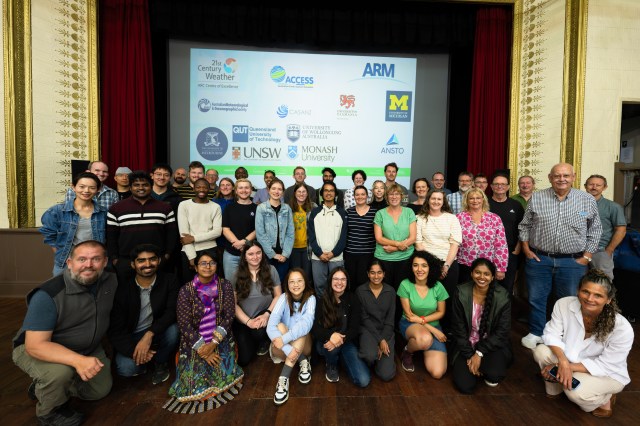
Unlike the summer school we ran in Cleveland last year we were not responsible for the overall organization. We came in with the skills and background to run the hackathon hands on coding component. ARM also supported four students, three US based students and a student from Melbourne University. Of course we jumped at the chance to have an international impact in our Education and Outreach Coordination (EOC) efforts. We took the same playbook we developed previously, using the resources of Project Pythia where the students will develop Jupyter cookbooks on a variety of science themes.
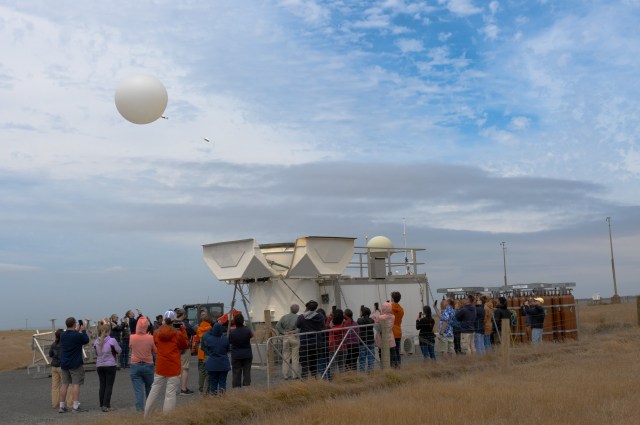
Unlike Cleveland, the school was located close to the ARM deployment allowing a site visit. This was incredible allowing the 27 students (our four and 23 others from Australia and Europe) to see the world class instrumentation at the site. For those that do not know ARM is a Department of Energy, Office of Science user facility. The office of science is the largest federal sponsor of basic research in the physical sciences. Unlike NOAA or NASA ARM focuses on collecting key observations to improve our predictive understanding of our planet. The science advances from ARM benefit everyone from city planners to grid operators. The reason why ARM is in Tasmania is because the southern oceans is one of the most observationally sparse regions on the planet and what happens in the southern ocean impacts the whole globe including the USA.

Our EOC mission is to enhance the impact of ARM data by training the workforce of the future. ARM data is complex, REALLY complex and ARM has developed a suite of open tools like ACT and Py-ART that make it easier for everyone to use our data. This is why Max and I traveled hours (many many hours) downunder to help our friends. We are so lucky to have amazing mentors for the group projects from the University of Wollongong (our fearless leader Clare Murphy), the University of Michigan, the University of Melbourne and Monash University. We also could not have done this without the support of the ARC Center of Excellence for the Weather of the 21st Century, ACCESS-NRI, AMOS and CASANZ. And of course the support of the Australian Bureau of Meteorology (my old employer!) and CSIRO

The student projects were AMAZING. Four projects spanning the gamut of earth science. These students give me hope for our scientific future. The skills these students will bring into our field will mean a more predictable earth system meaning better planning and more lives saved.
Editorial note: These views are my own, Scott Collis, and do not necessarily represent the views of any of the organizations mentioned in this article.
 OpenSky