American Geophysical Union (AGU) Wrap Up

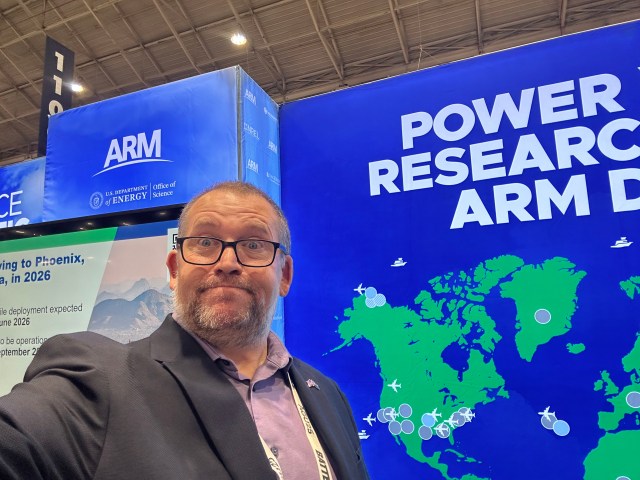
Representing ARM at the booth.

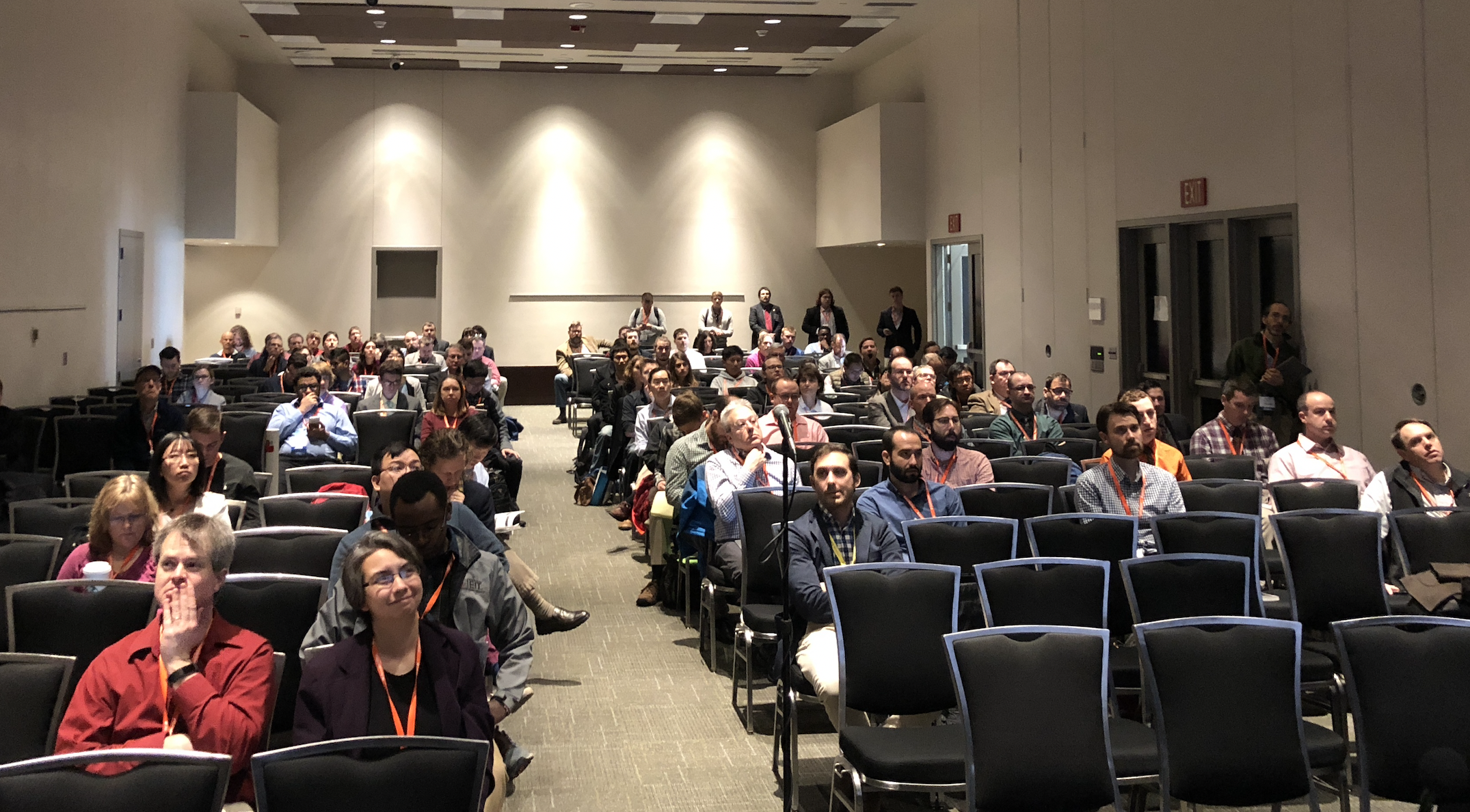
Why do we meet? That is a question I ask all the time. Why do we spend the time, inconvenience, taxpayer’s money to all move our meat sacks to a common location? It is because science is a team sport. From the days of debating at the Royal Society active person to person and person to group communications is vital for the sharing and discussion of ideas. There has been a lot of pushback on our science lately as not being willing to accept criticism and that those involved in the earth sciences are an echo chamber of self reinforcing tropes.

This is why we meet. To present and challenge our beliefs in a respectful way. Also, for those of us who work in large teams, meeting in person can resolve an issue that has lingered for weeks via email in a 30 minute sit down. This could mean 5 trips across the USA or one trip to a societal meeting like AGU.

Representing ARM’s Summer Schools

I had debated the value of going to AGU this year. I had plans to go to the American Meteorological Society (AMS) meeting in Houston as I have a much greater leadership role in the AMS. In the end, due to losing one of our key staff to private industry, being asked to chair a session and a new mission, attached to my interest in Project Genesis I decided it was worth meeting.

First, on project Genesis. Bad data = Bad AI. More and more data is being enabled and collected by private industry. One mission I had this AGU was to understand the increasing roles of startups and established players in the private sector and which entities I should advocate for Argonne to partner with. I met with over 10 potential industry partners and learned about everything from the commercialization of OU drones with iMet to self driving weather balloons from Sorcerer.
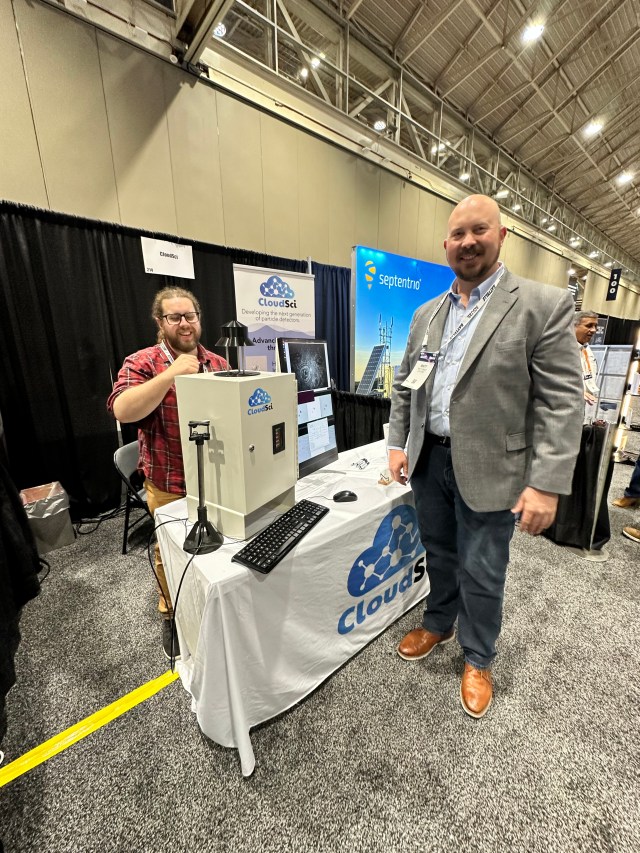
CloudSci at AGU. Some pretty cool tech.

I also had the distinct honor of seeing my ANL Colleague, Jiwen Fan, become an AGU fellow. Why is this a big deal? Science is built on trust. Being named a fellow of a society (AGU, and AMS for example) is the action of that society saying “This person, they have done some great things for science and you should listen to them”. Does this sound elitist? yes. It is by the very definition elitist. But when it comes to trust being elite is important. When I fly I want a top gun pilot, when I am under the knife I want the best surgeon. And when it comes to understanding how aerosols impact clouds, I want to trust the best scientists.

Congratulations Jiwen!

The other big job I had to do was helping to get the good word out about my primary sponsor, the Atmospheric Radiation Measurement Facility (ARM). ARM is user facility of the Department of Energy and is the largest open atmospheric observatory focused on improving simulations of the atmosphere on the planet. In order to make ARM impactful scientists, those who attend AGU, need to know we exist and what we offer. So, like my days, decades ago, selling furniture back in Australia for K-Mart, I was in sales! And the sell was easy: Got Science? We got data! ARM’s mission drew me to the USA and will always be home base. Also, we were letting everyone know we are running the next ARM Summer School on Big Open Data Science! We can’t train the next generation of Energy ready scientists if they don’t know what we are doing.

Now, yes, is New Orleans fun? YES! Is it a perk to travel? Yes… And I acknowledge that privildge. It is both a perk and a pain. A benefit and a cost. To say otherwise will be disingenuous. I love seeing the world and this is my fourth visit to the big easy. I love this southern city. The food, the vibe and, in December, the nice temperature! Conducive to scientific collaboration and good for the soul that has been incased in Chicago cold.

CAPE-k Summer School

Long time, no post. I’ve got to get better at updating this blog. Good news is I have something very nice to post about! We have just finished helping at the Cloud And Precipitation Experiment at kennaook (CAPE-k) Summer School! Max Grover and myself were approached by the Director of the ARM facility with a request to help on a course after he attended the kick off of a deployment of the ARM facility to the kennaook/Cape Grim Baseline Air Pollution Station (KCGBAPS) on the northwestern tip of Tasmania. Note that the lower case k is not a typo as the indigenous peoples of the region do not capitalize place names.

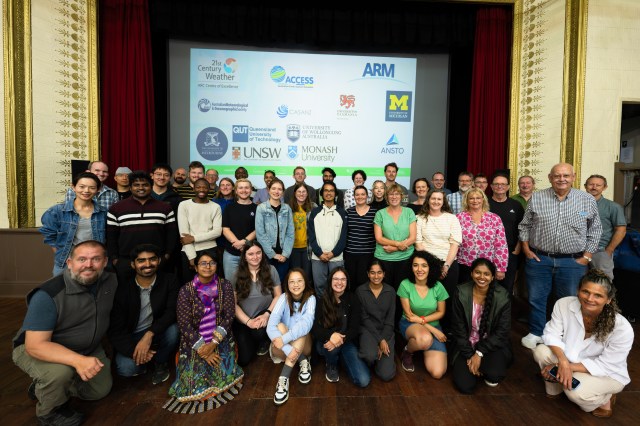
Summer school students, instructors and Cape Grim scientists

Unlike the summer school we ran in Cleveland last year we were not responsible for the overall organization. We came in with the skills and background to run the hackathon hands on coding component. ARM also supported four students, three US based students and a student from Melbourne University. Of course we jumped at the chance to have an international impact in our Education and Outreach Coordination (EOC) efforts. We took the same playbook we developed previously, using the resources of Project Pythia where the students will develop Jupyter cookbooks on a variety of science themes.

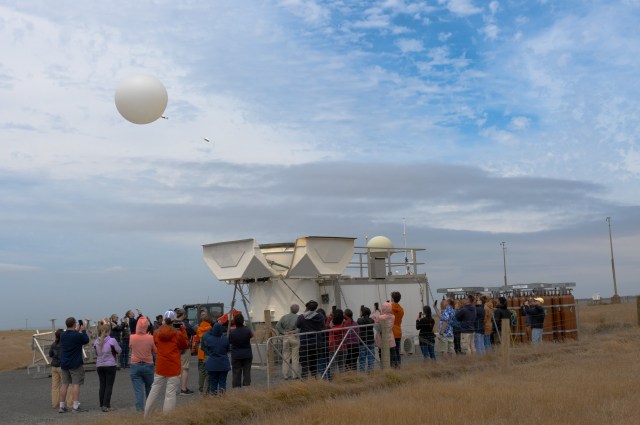
A weather balloon launcher from the BOM/ARM Autosonde collecting KEY data in the southern ocean.

Unlike Cleveland, the school was located close to the ARM deployment allowing a site visit. This was incredible allowing the 27 students (our four and 23 others from Australia and Europe) to see the world class instrumentation at the site. For those that do not know ARM is a Department of Energy, Office of Science user facility. The office of science is the largest federal sponsor of basic research in the physical sciences. Unlike NOAA or NASA ARM focuses on collecting key observations to improve our predictive understanding of our planet. The science advances from ARM benefit everyone from city planners to grid operators. The reason why ARM is in Tasmania is because the southern oceans is one of the most observationally sparse regions on the planet and what happens in the southern ocean impacts the whole globe including the USA.

Four students from the USA and Australia supported by ARM to attend the school. Emily Tomasiuk, Kyndra Buglione, Keyleigh Reilly and Tiantain Zhu.

Our EOC mission is to enhance the impact of ARM data by training the workforce of the future. ARM data is complex, REALLY complex and ARM has developed a suite of open tools like ACT and Py-ART that make it easier for everyone to use our data. This is why Max and I traveled hours (many many hours) downunder to help our friends. We are so lucky to have amazing mentors for the group projects from the University of Wollongong (our fearless leader Clare Murphy), the University of Michigan, the University of Melbourne and Monash University. We also could not have done this without the support of the ARC Center of Excellence for the Weather of the 21st Century, ACCESS-NRI, AMOS and CASANZ. And of course the support of the Australian Bureau of Meteorology (my old employer!) and CSIRO

The team on the site visit to Cape Grim and the CAPE-k ARM deployment.

The student projects were AMAZING. Four projects spanning the gamut of earth science. These students give me hope for our scientific future. The skills these students will bring into our field will mean a more predictable earth system meaning better planning and more lives saved.

Editorial note: These views are my own, Scott Collis, and do not necessarily represent the views of any of the organizations mentioned in this article.

The Future of the Open Programming Symposiums

Started by Johnny Lin, the Python Symposium (Symposium on Advances in Modeling and Analysis Using Python now the Symposium on Advances in Modeling and Analysis Using the Programming Languages of Open Science) has been a home for showing the community of the American Meteorological Society how we do our science. A place to show code and nurture the next generation of contributors in the weather and climate enterprize. I (Scott) took over leadership after the 2017 meeting in Seattle chairing the 2018 meeting in Austin (with an amazing keynote from Matt Rocklin!) . Since then my career has, well, taken off and it is time for new leadership and a reimagining of our symposium. At the 104th annual meeting in Baltimore I announce my plan for the 105th meeting in New Orleans to be the last symposium I lead. I hope to have a cadre of new leaders help me with the 105th meeting. We will be holding a virtual meeting in May to recruit and discuss the future of the symposium. Please sign up and express your interest HERE. This will help us decide the future of leadership for the 106th meeting in Houston and beyond.

Leading the symposium has been a pleasure! Each year after leading it I feel rejuvenated and keen to do it again. It is important to pass on the torch to new generation who can innovate and take our symposium in a new direction.